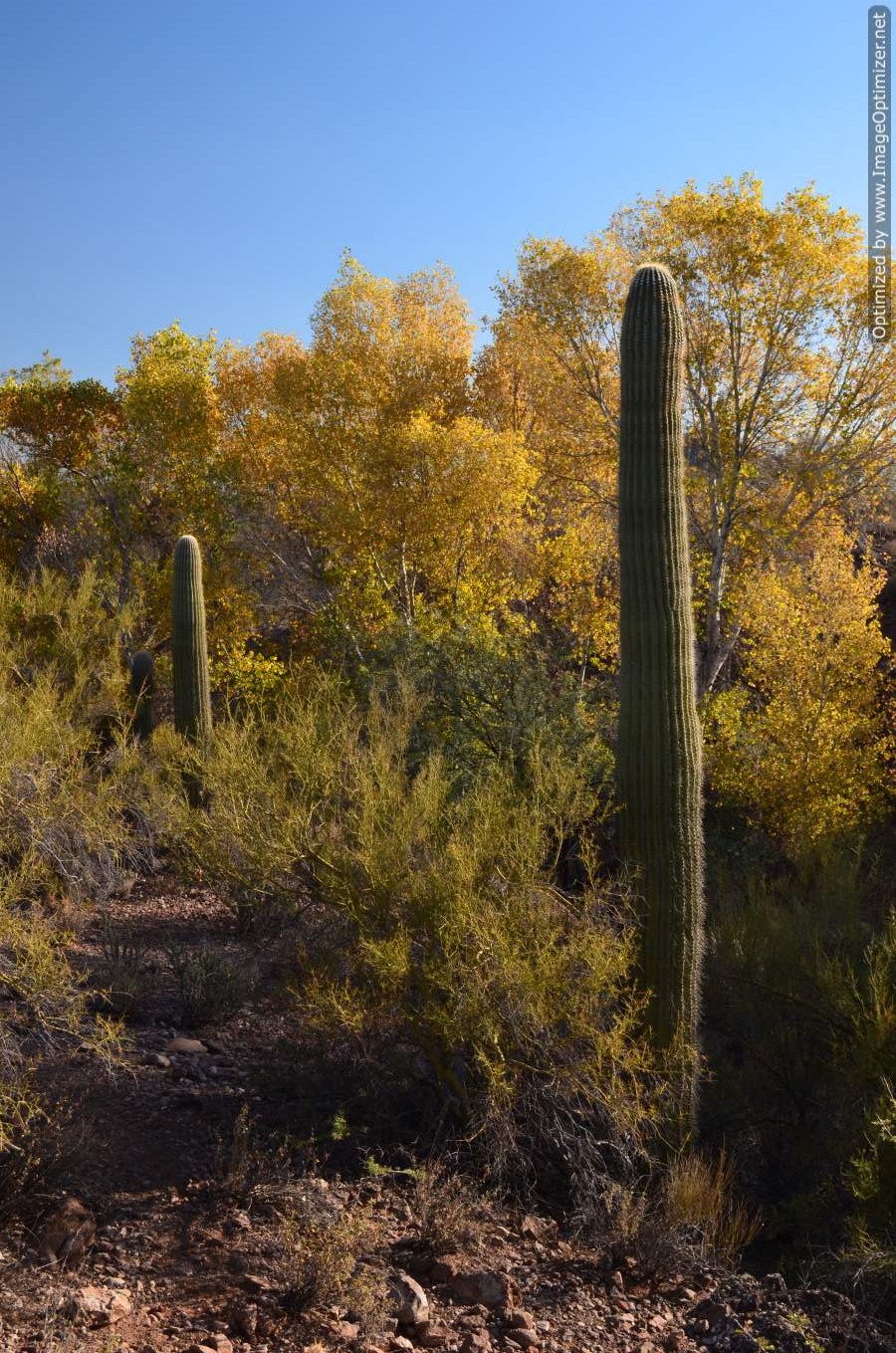
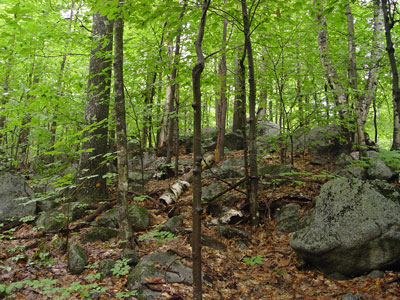
Showing posts with label Plants. Show all posts

Friday, February 1, 2013

Legumes: Self Fertilizing Plants

The green stem of the legume palo verde tree in the Sonoran Desert.
Determining how to fertilize a plant can be quite the difficulty.  You may have heard that most people over water their plants, but it is also true that most people over fertilize their plants.  Certain plants however never need to be fertilized simply because they have "figured" out a way to fertilize themselves.  Bean plants, also called legumes, form a symbiotic relationship with a bacterium known as rhizobium.  The air we breath is about 70 percent nitrogen, an essential nutrient for plant fertilization.  Atmospheric nitrogen however cannot be used by plants, it must be converted into a different form called ammonium.  Rhizobium bacteria has the ability to take nitrogen gas and convert it into ammonium.  This changing of nitrogen gas into ammonium is known as nitrogen fixation. 

Using legumes in the garden can be quite a useful way to fertilize your plants naturally.  Farmers in the Midwest will often alternate between corn and soybeans, taking advantage of the fact that soybeans naturally replenish the soil with nitrogen fertilizer that the corn can use.  In deserts, which have soils that are naturally deficient in nitrogen, plants must either be adapted to living in soils with low nutrients or have the ability to fix their own nitrogen.  For this reason, legumes are extremely common in desert ecosystems.  Legumes are not just your typical bean plant, they also grow into bushes and trees.  In the Sonoran Desert palo verdes, mesquites, ironwoods, and acacias are all small legume trees that form bean-like pods.  Typically, these legume trees will form islands of soil under their canopy that are rich in nutrients compared to soils beyond the canopy.  Because of the slightly richer soil many smaller plants will often be growing in this micro-environment. 
The darker growths on these plant roots are tumors infected with rhizobium bacteria.
Legumes and Rhizobium bacteria form their association with each other in the soil-root environment.  Rhizobium are naturally occurring soil bacteria but don't really do much if they haven't infected a legume.  When bean seeds germinate and begin to grow, rhizobium already present in the soil infects the new plants roots.  Points of rhizobium infection in the roots form into tumorous-like growths which are like little nitrogen fixing factories.  Typically we think of tumors as unhealthy but be assured, this type of plant tumor is very healthy and beneficial to not only the infected plant but also to the entire environment.  Legume plants that for some reason are not infected become extremely anemic with stunted growth and yellow coloration. 

Monday, January 21, 2013

Tassel Ear Corn


Tassel-ear that another garden produced.
Back in July we planted several blocks of corn in our college garden.  July is the normal time to plant corn in the Arizona Sonoran Desert.  The corn we planted was a normal desert adapted variety that was supposed to mature in about 70 days and grow to about five feet.  This would mean we would harvest our corn about the first of October.  Some of the corn grew exactly as we expected.  Most of it however just kept growing and growing and growing until December (150 days) and never reached maturity.  The corn grew to over 10 feet tall and produced weird tassel-ears at about five feet.  Oddly, this extremely tall tassel-ear corn was the exact same variety as the corn that grew to only five feet and reached maturity in 70 days. 

Why the extreme difference?  We wondered if we had messed-up by planting some other seeds instead.  But we could find no evidence of that.  We also wondered if we had some mutant corn.  Again, no evidence.  We also wondered if we had planted to late in the season.  Probably not since the varieties of corn we planted normally are planted that time of year.  So what was mutating this corn into a gigantic tassel-ear plant?

With a little more investigation we found that the soil where our gigantic mutant corn grew had extremely high clay content and was very commonly saturated with water.  Water was often found pooling in this area.  Areas where the corn grew as would normally be expected also had slightly lower clay content but were not saturated with water and did not have pooling issues.  But we had no good explanation for why poorly aerated, high clay content, water saturated soils would produce gigantic mutant tassel-ear corn.  So we took to the internet, where answers to all good gardening questions are found of course...


What we found was the condition of tassel-ear corn.  This is where corn cobs also form tassels, just as our corn did.  Our corn appears to be an extreme example of this condition though with the corn cob actually becoming very elongated and forming mostly tassel.  Apparently this condition is common where corn plants are growing under poor soil conditions, just like ours.  No one knows what triggers tassel-ears but from what I read, all corn cobs start off as both male and female, or both tassel and corn cob.  Hormonal changes in the cob during development normally cause the cob to become fully female and produce seed and not a tassel.  For some reason, tassel-ear corn does not have a hormonal change and the result is a corn cob that is both male and female.  This condition does not however explain why our corn grew twice as tall and for twice as long as it should have.  I could find no explanation for these weird problems though.  For now, I'm simply blaming poor soil conditions on everything.

Friday, January 18, 2013

The Truth About Genetically Modified Corn


There is an increasing amount of hype about genetically modified organisms. And for good reason, without us really knowing it, genetically altered foods have invaded the grocery store. For example, 90 percent of corn grown in the United States is genetically altered. This necessarily means that a huge proportion of corn products within the grocery store are also genetically modified.  Considering corn or corn products are found in seemingly everything, that's a lot of grocery store products that have genetic modification as part of them.  The question is, is genetic modification really a problem I should be concerned about?  To be sure, there really isn't a perfectly straight forward answer.  Mostly, the answer is we simply don't know.  Corn amazingly has 32,000 genes, nearly 12,000 more genes than humans.  That means there are 32,000 genes that could be modified, or added to or subtracted from.  In reality there are potentially millions of ways to genetically modify corn or any other organism.  There is no way we could say that all of these tens of thousands of potential gene modifications are harmful, and there is no way we could say all of them could be helpful.  Its sort of complex.

For example, Bt corn has a gene added to it that produces a pesticide.  This gene was taken from a naturally occurring bacteria that infects insect larva.  Bt corn therefore produces this pesticide and kills potential insects that might eat the crop and therefore decreasing the harvest.  So Bt corn becomes extremely beneficial to corn production but has negative impacts on insect populations.  You may initially think that this is a good thing, who really cares about those annoying insects anyway?  Well, some of those insects are bugs that people love and are very important to the environment such as monarchs and other butterflys.  Bt corn can and is having very negative results on the environments we live in.  Beyond that and into our homes, there is evidence that Bt corn is causing elevated immune responses which means increases in auto immune disorders and allergies.  A number of studies though suggest there is no negative health consequence to Bt corn.

Another common corn genetic modification is round-up ready corn.  This is corn that can resist being killed by the herbicide round-up, so farmers can spray there fields of corn killing only the weeds and not the corn.  Again, corn production is greatly increased but the environmental and health consequences are negative.  It not clear though if the actual genetic modification is actually causing the health problems however.  Residue round-up herbicide is however causing at least some of the health problems though.  These health problems are very serious in lab rats and include kidney and liver damage, and cancer.  It is very likely humans have very similar health problems with round-up ready corn.

Other genetic modifications are likely less harmful to the environment or health and may even be extremely beneficial.  For example, modification of a heat shock protein in corn could allow it to tolerate drought better.  The heat shock protein would likely have no consequence on human health.  Corn could also be modified to have higher levels of vitamins.  Whether these so called 'good' modifications are actually 'good' would be very difficult to actually determine, and may only be in the eye of the beholder.

Currently in the stores, nearly all corn products are genetically modified.  Only corn that is labeled as non-GMO or organic can normally be assumed as being GMO free. 

Friday, December 21, 2012

Mistletoe: The Kissing Parasitic Plant with a Gross Background...

This is a post from two years ago but I thought it worthy of reposting.  Mistletoe has such a fascinating background and considering the time of year...

For many years now, every time I see mistletoe hanging-up around Christmas time I find it sort of humorous.  Most people think of mistletoe as the "kissing" plant.  While I also think of it as the "kissing" plant, I also think of its complex parasitic life-cycle.  Yes, mistletoe is a parasite, and is pretty common in western forests and deserts.

A clump of mistletoe growing in the center of a juniper tree.
However, parasitism is only the beginning of the story.  Even more interesting is how the mistletoe got on the tree in the first place.  Mistletoe produces red or white berries which are possibly toxic to humans but extremely tasty and nutritious to birds of all types.  Many types of birds will gorge themselves on the berries and as a consequence carry the seeds to new locations.  In-fact, a southwestern bird known as the pheinopepla was found to eat around 1100 berries a day when berries were available.   Eating all those berries means a lot of seeds being transporting to new plants that baby mistletoes can parasitize.

Phainopepla, found to eat around 1100 mistletoe berries per day when berries were available.
Seeds are transported in the birds digestive tract but also on their beaks.  Mistletoe berries are covered with a very sticky substance causing seeds to stick to the birds beak, which the birds wipe off onto trees and shrubs where a new plant can grow.  The sticky seeds also pass through the digestive tract of birds and when defecated on a plant can germinate and parasitize the new plant very quickly.

Desert tree severely parasitized by mistletoe.
From all this you may think that mistletoe is a severe problem taking over and destroying our forests, but things to not always as they first appear.  In many cases mistletoe actually benefits the forest.  First of all the berries provide food for bird species that live in the area, increasing the number of birds and number of bird species an area can support.  Secondly, some trees, such as the junipers, when parasitized actually produce more of their own seeds.  This also increases the food available for birds and animals, thus supporting greater numbers of animals and greater diversity as well.  Parastized trees also form deformed 'witches brooms' which many birds and animals prefer for nesting sites. 

So the next time you see mistletoe hanging in the doorway, wow your "kisser" with this knowledge and they may never look at mistletoe in the same way.  They may not want to kiss you after their new found knowledge either though...  But this may be a good thing...

Monday, December 17, 2012

December Ephemeral Drainage Flow

A dry wash the morning after a flash flood came though.
The mid-December rain is the most reliable rainfall we receive here in the Sonoran Desert.  This rainstorm is almost like clockwork.  Every December, usually around the 15th or so, a strong Pacific frontal storm system brings rainfall in from the northwest.  One-half to one inch of rain pretty much falls across the entire desert with higher totals in the mountains.  Of the past ten Decembers, only one failed to produce any rainfall and that was during one of the driest winters on record in Arizona.  This year was picture perfect with one-half to one inch of rain falling in the Sonoran Desert between December 13th and 15th.  With this rain being almost like clockwork, the flow of the normally dry washes also flow during this rain almost like clockwork.  This year was a little odd in that the rain was spread out over a three day period making flows a little weaker than normal.  Typically, dry washes require a significant amount of rain over a short period of time in order to generate enough runoff to supply a flow.  A lot of drainages did flow at least a little though. 

Of course, a lot of rain over a short period of time helps these washes to flow in the desert, but there are other factors involved also.  Geology, or geomorphology, are probably the most important factors in determining flow.  Geomorphology is simply a scientific term that describes how landforms came about and how they function.  One of the functions of geology and geomorphology in the landscape is to determine how and where water flows.  For example, shallow unbroken bedrock is going to prevent water from seeping down into the soil and therefore will result in greater amounts of runoff.  Type of soil also matters in the amount of runoff produced.  Rain seeps very slowly into clay soils so a lot of runoff can be generated.  Sandy soils however can quickly absorb a lot of rain so not much will runoff.  Number of rocks also makes a difference.  Soils with fewer rocks have more runoff than soils with more rocks.  Rocks on a soil surface slow the speed of runoff and with slow speeds of runoff the water has more time to be absorbed into the soil.  Size of the dry wash also makes a difference with smaller washes flowing more frequently than larger washes.  However, larger washes tend to run longer than small washes when they do flow.  Larger washes simply need a lot more water to flow. Depending on the combination of these factors some washes will flow a few times annually while others will only flow a few times a decade.

All of these things factors also determine what lives where along a dry wash.  Flow is normally very short in duration in a wash.  This is simply because flowing water quickly is lost as it is absorbed into the sediments of the stream bed.  Though flowing water is lost, the water is not entirely lost.  Water is stored in these sediments for long periods of time after surface flow ends.  Depending on the depth of this moisture and the depth of the sediments differing plants will occupy the area.  Typically, deep sediments with relatively frequent flows will be occupied by blue palo verde and desert willow.  Areas of fewer or shorter flows typically have yellow palo verde.  Other plants such as acacia's, ironwood, wolfberry, and mesquites can be somewhere in-between. 

Friday, December 14, 2012

Fall Leaves in a Sonoran Desert Riparian Zone

A Sonoran Desert riparian area in fall along Cottonwood Creek.
The desert is most definitely not known for spectacular fall colors.  Fall colors do however, find their place along some of the wetter desert water courses.  If perennial water sources are available, even if it is hidden below ground a short distance, the roots of large deciduous trees will find there way to it.  Sycamores, cottonwoods, and willows are all relatively common along streams and washes with perennial sources of water.  Even Arizona walnut and ash trees can be found in some of the more stable riparian zones.  These trees do not display the brilliant hues of red and orange common to eastern forests but do show off bright yellows that are in stark contrast to the dried out browns and greens of the desert.    Desert fall leaves are quite a rarity and are quite unique.  Typically, perennial water sources are considered perched water tables.  A perched water table simply is water that accumulated above the surrounding water sources, most often a result of bedrock that prevents water from penetrating deeper into the soil and out of reach of plant roots.

A recent hike I took demonstrated this concept extremely well.  The hike was along Cottonwood Creek near Lake Pleasant north west of Phoenix.  The majority of this hike is along Cottonwood Creek, which really isn't much of a creek considering water only flows in this creek a few hours every year.  The rest of the year the wash remains mostly dry, except for a few locations.  Nearly all washes in the desert are called dry washes, and for good reason: they are completely bone dry the majority of the year.  A few washes, such as Cottonwood Creek are fortunate enough to have areas that always remain wet.  Cottonwood Creek owes this moisture to its underlying geology.  First off, the creek bed lays at the base of two small bajadas between two small mountain ranges.  One bajada lays to the north of the creek bed and one to the south.  These bajadas and bedrock of the mountains are relatively steep and provide ample runoff to Cottonwood creek so it will run during periods of heavy rainfall.  Moisture is quickly lost into the deep sediments of the bajada and placed out of reach of deciduous tree roots.  In areas where bedrock are shallow though, moisture cannot penetrate deeply and remains closer to the surface within reach of plant roots.  Bedrock can also push water flowing underground towards the surface.  At these locations large deciduous trees take advantage of the shallow moisture and can in a few places form small but beautiful wooded areas.

Wildlife may not be obvious in these small wooded areas, but if you look at the ground you are sure to see evidence of animals.  Javelina and mule deer heavily utilize these small areas and their hoof prints are normally abundant.  In some area, such as along Cottonwood Creek, wild donkey's are also abundant and heavily utilize these areas.  The abundance of shade, food, water, and cooler conditions during hot dry summers gives great value to these areas for every creature.

Monday, November 5, 2012

Barrel Cactus Part 2

California barrel cactus, Ferocactus cylindraceus.
Barrel cacti are kind of as their names imply, barrels full of water.  The problem is, the water isn't just hanging out in the cactus like a big glass of water.  The water is stored inside of the cells that fill the interior of the cactus.  The best way to get this water is to eat the tissue, though it won't taste very good and probably will make you sick.  The thick layer of hooked spines will also deter any person or animal from easily accessing this water though.  In drought however, the barrel cacti is one of the best sources of water for desert animals there is, that is, if they can get through the spines.  Small animals like rats, chipmunks, or mice can avoid spines by burrowing underground slightly to where there are no spines and then eating up into the cactus.  I have actually found a few barrel cacti that have been entirely hollowed out by rodents, yet have there skin and spines fully intact.  Larger animals such as deer have no such luck though accessing moisture from a standing barrel cactus though.  The spines become just too big of a deterrent.

Red spines of the barrel cactus show up after being wet by rain.
Fortunately, for larger mammals the barrel cactus has a fatal flaw.  As a barrel cactus grows it generally leans towards the southwest, which is the direction from which the most intense sun comes from.  Nearly all barrels lean to the southwest, just as a compass always points north, thus the common name compass barrel.   It might seem that leaning in the direction of the brightest sunlight might mean the cactus is trying to gather as much sunlight as possible.  This is however the exact opposite of what it is doing.  With the top of the cactus pointing directly at the most intense sun, spines at the top actually shade out much of this light and all sides of the cactus actually avoid this direct sunlight.  The sides however gather the most sunlight from the sides, as the sun comes up or goes down, when the sun rays are less intense and therefore less damaging to the cactus.  Pointing tops towards the most intense sunlight is therefore actually a protection mechanism, rather than a gathering mechanism, against intense sunlight.
A barrel cactus that fell over due to leaning towards the southwest.  Even though this cactus fell over, it continues to grow.
Leaning is an important adaptive strategy of the cactus, but is this strength also lays a huge weakness.  As the barrel cacti grows and leans it becomes very off balance.  Older, large cacti will often simply fall over.  Oddly, even when the cactus falls over it will continue to live and grow as it lives laying on the ground.  Once the barrel cactus falls over, the underside of the cactus is exposed which is unprotected by spines.  Large mammals will often start eating the barrel from this unprotected portion during drought.  
Flower of the California barrel cactus Ferocactus cylindraceus.

Friday, November 2, 2012

Barrel Cactus Part 1

Compass Barrel cactus
The barrel cactus is one of the most common cacti in the Southwest.  There are four different species common to this area of the country, the most common of which are the compass barrel and the California barrel.  It can be extremely difficult to distinguish between these two common species of barrels.  In southern Arizona, such as around Tucson, the compass barrel is the most common of the two cacti.  In central Arizona such as around Phoenix, southern California, and even into the depths of the Grand Canyon the California barrel cactus is the most common.  Their ranges overlap in central Arizona and their similarities are pretty extensive.  Without closer investigation you may not be able to determine what specific species a particular barrel is, there are however a few differences that may help in identification.  First off is shape.  Of course, barrel cacti are all sort of barrel shaped.  The compass barrel is a little more wide and plump than the California barrel.  The California barrel  is a little skinnier.  The second way to distinguish between the two is by looking at the spines.  Both have very interesting spines which are often red colored.  This red coloration gives a sharp contrast to the dark green of the cacti's body, especially after a rare rainfall.  Both cacti also have flattened central spines that have a ribbing pattern on them.  The central spines are also hooked, giving both cacti another common name of fishhook barrels.  Compass barrel cacti spines are however considerably more hooked than California barrels.  Compass barrel central spines are a full "fishhook" shape and were in-fact used as fishhooks by some Native Americans.  California barrel central spines are closer to a 90 degree curve than an actual fishhook.  These are the best ways, though not necessarily foolproof ways of distinguishing the two while out in the desert.

In our next post we will talk about the leaning habit of barrel cacti.
California barrel cactus front left of picture.


Monday, October 29, 2012

How To Identify a Cactus

The columnar saguaro cactus.  Note the huge column like shape and ribs lined with spines traversing from the bottom to top.
Cacti are one of the most diverse and interesting plant families in the plant kingdom.  Cacti are native only to North and South America but are prized worldwide by plant enthusiasts.  I once worked with a PH.D who was from England but came to the United States specifically to work with cacti.  While you can go to just about any botanical garden in the world to observe cacti, the Southwestern United States and Mexico are probably the best places to observe cacti in the wild (in North America at least).  Within the United States, cacti can be found in the wild in just about every state.  Where I grew-up in Iowa, every once in awhile I would come across plains prickly pears growing in a dry prairie.  Now, living in the Southwest I come across cacti every single day.  The Sonoran Desert is loaded with all kinds of different cacti ranging from the 50 foot Saguaro cactus to the six inch tall pincushion.  Cacti are really not that difficult to identify, at least to the genus or "group" level.  Just about anyone can learn the major groups of cacti simply by looking at three major traits; the shape, ribs, and spines.
Barrel cacti in foreground.  Named after their barrel like shape.  Barrel cacti also have ribs lined with spines.
Shape is possibly the easiest and best way to categorize a cactus.  The most common cactus group is the prickly pears.  These cacti have stems that are sectioned into flat, pear or pancake shaped pads.  The overall prickly pear plant is joined together by these pads typically forming a shrub shape.  Cholla cacti are similar in that the plant is made up of sections, but instead of these sections being flat and pear shaped, they are cylindrical, and the overall plant also is shrub shaped.  Barrel cacti are barrel shaped.  Columnar cacti such as saguaros form tall columns. Tiny pincushion cacti are small and often shaped like an actual pincushion.  Hedgehog cacti are sort of like small columnar cacti that only grow a few feet tall at most, with the small stems bunching together.
A cylindrical cholla cactus section.
Ribs are the next important way of identifying a cactus.  Saguaros and other columnar cacti have long ribs or pilleates that stretch from the bottom of the cactus to the top.  Hedgehogs and barrels also have ribs.  Pincushions, prickly pears, and chollas do not have ribs. 
Prickly pear cactus with flat pear shaped sections.
Lastly spines.  Spines don't always help us distinguish between different groups of cacti but are extremely useful in determining the actual species of cacti.  A few spines like the tiny hairlike glochid are only found on prickly pears.  Glochids are the tiny spines that get stuck in your skin and have to be taken out with a tweezers.  Pincushions typically have tons of white spins which helps give them a "pincushion" like appearance.  Spine color, number, and shape are essential in learning to distinguish specific species of cacti.
Hedgehog cactus

Pincushion cactus.


Friday, October 12, 2012

What Makes a Chili Pepper Spicy?


The chili pepper was first cultivated and bred for its spiciness in Central America, hundreds of years before any part of the rest of the world enjoyed it.  During this time, ancient Americans spiced all kinds of food with the chili.  In the southwest United States, Native Americans would gather wild chiltepine chilis and protect the plants for future use.  Aztecs were said to enjoy hot cocoa spiced with chili peppers.  When explores from the Old World began visiting North and South America in the 1500's they brought the chili to the rest of the world.  Now, the spiciness of the chili pepper has captured the taste buds of nearly the entire world.

It is amazing how the spiciness of the chili has been utilized in nearly every cuisine possible.  Even if a recipe is not made with the spice of chilis many people will put some sort of spicy sauce on it.  Think about Tabasco Sauce. people will put it on just about everything.  There is probably someone that puts it on there cold cereal in the morning.  The odd thing is, spicy flavor is painful and for some reason people like the pain (myself included).  Enjoying the spicy pain is a learned taste and some people can build-up quite a tolerance.  At least for decades, if not for centuries and millenniums, people have been trying to breed the next spiciest chili pepper.  It seemed for years the habanero held the record for spiciest chili.  In recent years a number of chili's have claimed to be the spiciest in the world.  Recently, the ghost pepper, also known as the naga bhut jolokia, from India held the title of worlds spiciest chili.  Now the trinidad moruga scorpion pepper holds the official Guinness World Record for spiciest chili. 

The secret to the chili's spiciness is the molecule capsicum.  This molecule is secreted by the white tissues holding the seeds inside the pepper.  Capsicum binds with pain receptors in the mouth responsible for detecting heat, therefore giving the spicy heat chilis are known for.  The body then responds by increasing perspiration, raising heart rate, and releasing endorphins.  Capsicum also has been shown to kill certain types of cancer cells and may indirectly aid weight loss.  In the wild, birds love spicy chili's, and mammals generally hate the spiciness (except for some humans of course).  When birds eat chili's the seeds pass through their digestive tract undamaged and can therefore germinate and grow if deposited in an ideal location.  The chewing and digestive tract of mammals however digests the seeds, preventing them from passing through the digestive tract.  This is exactly why chili peppers were spicy to begin with.  Caspicum deters mammals from eating them and to encourage birds to eat them, thus allowing the perpetuation of chili plants.  Cultivated varieties of chili's however are increasing in spiciness simply because humans are selectively breeding only the spiciest chili's in order to produce an even spicier chili. 

Friday, September 28, 2012

Creosote Bush

The Creosote Bush (Larrea Tridentata) is a relentless desert plant growing in the deserts in both North and South America.  In North America it is found in the hot Mojave, Sonoran, and Chihuahuan Deserts where it is possibly out numbers all other perennial plants.  The only North American desert where it is not found is the Great Basin, simply because it is too cold.  The Creosote is so relentless it can occupy the poorest soils in flat basin areas between the mountain ranges of these deserts.  Driving through the flat lands of these deserts you can drive mile after mile past near mono-cultures of this plant.  Its roots are so effective at extracting moisture from the soil that it is often very difficult for other plants to become established near Creosote.  Creosote roots can extract water from soil that is seemingly dry, surviving up to two years without rainfall.  They can also extract nearly all water from the soil, thus preventing any from ever reaching the water table. Creosotes are so good at all this that they can in-fact survive for over 11,000 years!


Friday, September 21, 2012

Post Summer 2012 Sonoran Desert Monsoon Season Photos

The high humidity and rain from monsoon season seems to be gone from the Sonoran Desert this year.  There is always a chance that it can come back, but as far as monsoon seasons go, this year was a good one.  The vast majority of the Sonoran Desert received more than the normal amount of rain and cooler than normal temperatures over a two and a half month period.  This had a great effect on greening the desert, wildflower blooms, an explosion in bugs, and increased wildlife activity and reproductive success.  Below I have shared a number of photos I took on a recent hiking trip the day after the last rainstorm we received. 
A leafed out ocotillo. 

Not sure what this catapillar is but I found thousands of these along the trail.

Butterflies are quite abundant now as a result of the rains.

Viguiera

A green desert grassland of Tobosa located near the top of the White Tank Mountains.

Trailing four o'clock

Friday, September 14, 2012

Everyone Should Love Garlic


Garlic is one of the worlds oldest cultivated crops.  6,000 years ago it was originally cultivated in central Asia.  From there it spread through out the world and has been a common staple or spice in cultures everywhere.  The ease at which garlic grows in a wide variety of environments throughout the world, along with the amazing number of aliments it has been used to treat, are very likely reasons for its spread throughout the world.  Since ancient times, physicians have been prescribing garlic as a remedy for all kinds of health problems.  With many ancient remedies, science has not been able to identify whether or not they work.  Often they do not work.  Garlic however has a wealth of scientific research to support its many health benefits.  Garlic is full of nutrients that help boost the health of the body.  Garlic is also loaded with all kinds of chemicals that have been shown to have positive health effects.  Many of these chemicals contain sulfur and are responsible for garlic's distinct odor. 

One of the most common and most known sulfur containing compounds in garlic is allicin.  Allicin is produced by garlic cloves once they are damaged, such as by cutting, chewing, crushing, and so on.  Once produced, allicin functions as a strong antibiotic and antifungal.  For this reason, many ancient cultures used garlic as an antiseptic, and of course, it still functions as an antiseptic today, albeit a smelly one.  Once cooked or as it passes through the digestive tract allicin begins to break-down into extremely strong antioxidants.  These antioxidants have been shown to help prevent cancer as well as slow its growth.  Other compounds in garlic have also been shown to have healthy effects on the cardiovascular system.  These benefits include thinning the blood and lowering blood pressure.  All of this points us towards including garlic as a regular everyday part of a healthy diet!

Monday, September 10, 2012

Monsoon Season: Breaking the Desert Drought


About two months ago I posted on how a 4th of July storm broke a severe drought we had been experiencing throughout all of 2012 (Monsoon Season and the Drought).  As always with desert rain patterns though, you never know if the rain is going to keep coming or if a single rainfall event was just a fluke.  Fortunately, we have had a pretty good monsoon season that began with an earlier than normal large rainfall event and still seems to be going.  As of now, most of the desert surrounding Phoenix has received about three inches of rain in the past two months, which is slightly above average.  As a result of the rain and additional humidity, temperatures have actually been cooler than normal.  We of course have had our 110 degree plus days, but nothing like what we have had the past several years. 

The effects of rainfall on the desert over the past two months has been quite dramatic.  The drought had been so severe that mesquites and acacias had gone leafless which is fairly rare.  Ironwoods also were loosing many leaves and yellowing, which is extremely rare.  Other plants such as wolfberry and palo verdes were also leafless.  Creosotes were loosing leaves quickly and leaves that did remain were often brown or yellowish.  Nearly all triangle leaf bursage looked as if it were completely dead and often brittle bush was just a bush of white crispy sticks.  As you looked out across the desert in late June it appeared to be a crispy brown landscape without much life.  The rain however changed all this very quickly.  Within days of the first rain, new bright green leaves began to sprout.  The sustained rain allowed for these leaves to keep growing and for new stems to begin growing also.  Creosotes show this dramatic change quite well.  Creosotes still retain some of the old more brownish leaves from the drought period.  Directly above these brown leaves though bright green leaves are growing like crazy.  Ironwoods, palo verdes, wolfberries, mesquites, and acacias are also all full of leaves.  One thing I love about the desert after rain is all the different shades of green that color the landscape.  Each one of these plants has a slightly different shade, from the dark thick green of the ironwood, to the yellowish light green of the palo verde.  There also has been enough rain for the wolfberries and creosotes to flower.  Many wolfberries are in-fact loaded with fruit right now as a result of the rain.

All of this has had very positive effects on the wildlife.  I have noticed good populations of gambles quail as well as some healthy rabbit populations.  I am also sure many of the song birds are benefiting by the increase in berries and bugs.  The additional water and grass growth should also be having a positive effect on mule deer, hopefully increasing fawn survival.

So for now, the drought has been broken and with continued rainfall we can hopefully keep from returning back to drought conditions.  As of now, the National Weather Service is predicting the return of El Nino this fall and winter, which often means more rainfall.  A lot of weather scientists hold La Nina responsible for the drought in the Southwest over the last few years. 

Friday, September 7, 2012

Life of a Maple Part 5: Maple Incline and Decline

Healthy sugar maple forest.
It is very likely that prior to European settlement that deciduous forests of eastern North America were actually more disturbed than they are today.  This presettlement disturbance however was much different from the disturbance we see in our forests today.  Today, we see grazing, logging, invasive species, and widespread agriculture as the major forms of disturbance.  During presettlement days fire was the most common type of disturbance of the forest.  Just like the modern disturbances, it is very likely that fire was also human caused in a vast majority of cases.  Given the wet nature of eastern deciduous forests, it is extremely unlikely that fire could have been anything other than human caused.  While today's disturbances are typically an after though to land use, Native Americans purposely used fire to manipulate the landscape, increasing its productivity, and health. 

Fire however, strongly works against the maple tree.  Remembering back to previous installments of this series on maple trees, you might remember that maples prefer very stable, undisturbed habitats.  Anytime fire comes around one of these habitats where maples have become established, the maples are killed off.  As a result, prior to European settlement of the eastern deciduous forest oaks, a fire adapted species were far more abundant, and maples, a fire intolerant species were far less abundant.  By some estimates in some locations there may be up to three times more maples today than there was in the 1800's.  The increase of maples over the last century is a result of fire suppression by European settlers.  It was only on the best soils, in the most ideal habitats where fire didn't touch that maples were found in the 1800's and prior. 
Sugar Maples in fall.
As fire was suppressed and forests began to stabilize, maples began to expand there range.  Maples increased, invaded, and replaced forests that historically had been filled with oaks.  Oak forests typically are far drier and have poorer soil than ideal maple forests.  Oak forests were naturally more prone to fire and therefore easily survived.  But without fire maples moved in. 

Maples moving into areas of less than ideal soil wasn't the best thing for the forest.  Being maples are extremely picky about their environment, living in these less than ideal soils made them especially sensitive to drought.  Oaks are adapted to drought but maples are not.  Maples ideally overcome drought simply by living in the best soils in the forest.  But in less than ideal soils, the maples were damaged during drought.  The damage did not end with drought though.  Drought damage made the tree more susceptible to other problems such as fungal infections and insect damage which often end up killing the tree.  So the incline of maples was a direct result of fire suppression allowing maples to move into marginal habitats.  Maple decline is a result of maples living in these marginal habitats.
Forest where many of the maple trees are dying due to "maple decline".

Monday, September 3, 2012

Life of a Maple Part 4: Maple Syrup


If the Sugar Maple tree is famous for anything, it is famous for maple syrup.  Early each spring as the snow melts, maple syrup farms spring to life from the Midwest U.S., Northeast U.S., and Southeast Canada.  I personally have payed a few visits to these farms and they are always quite an interesting experience.  The weather is typically beautiful with temperatures between 30 and 50 degrees.  This is at least beautiful compared to the previous winter months.  Snow is typically on the ground but melting, which is producing the next most memorable thing about most maple syrup farms: mud.  The farms I've visited are always unbelievably muddy.  They are so muddy in-fact that horses are often used to gather sap.  Horses are used rather than tractors or other vehicles simply because they don't get stuck in the mud! 

The story of how maple syrup is made begins with the previous late summer.  Late in the summer, the maple tree stops growing and instead stores energy in the form of starch.  This starch is stored in the trees sapwood through the winter.  Come spring when sapwood temperatures reach about 40 degrees the starch is converted to sugar by an enzyme and moves out of the wood and into the tree sap.  Rising temperatures, particularly in the morning as the sun comes up, cause the sap to rise through vessels.  The sap rises towards the trees twigs and branches where the sugar will help the tree to begin flowering and budding. 
A large maple tree with two taps and buckets for collecting sap.
As the sap rises, if a tap is in place, some of the sap will drip out of the tree.  This sap generally contains about 2-3 percent sugar and is collected in buckets hanging from the tap.  One Sugar Maple tap can produce 5 to 15 gallons of sap.  Once the sap is gathered from multiple trees it is boiled down to evaporate off the water and concentrate the sugars to form maple syrup.  Typically 40 gallons of sap will produce about 1 gallon of maple syrup.  While sugar maples are the most common tree for producing syrup, red maples, black maples, silver maples, and even boxelder trees (also in the maple family) all can produce syrup. 

Maple syrup was first discovered by and utilized by Native Americans.  Europeans quickly picked-up on the practice and refined it to the practice we see today. 

Monday, August 27, 2012

Life of a Maple Part 3: The Maple Tree and Sunlight


When it comes to soil, Sugar Maples are pretty picky.  When it comes to sunlight however, maples aren't picky at all.  Other trees, such as oaks, prefer to have as much sunlight as possible through out their entire lifespan.  Maples however can do quite well with very low levels of light early on in life.  This is a very fortunate adaptation being the most ideal soils for maples are typically going to be located in the shade of large trees.  Lots of, but not complete, shade aids the germination and early sprouts of maples.  However, maple seedlings will often have stunted growth in very low light situations.  Small seedlings and saplings are capable of surviving many years in the shade of larger trees.  Other sun loving trees such as oaks simply would die due to lack of sunlight.  These small maple trees simply wait until the larger tree dies and is removed by ice storms, wind, or disease.  The wait for an older maple to die can be a long one though being they are capable of living 500 years. 

Once these over-story trees are out of the way, smaller trees that had waited patiently in the shade for years suddenly make a bolt for the sky until becoming a dominant tree in the forest canopy.  This cycle can then repeat itself many times over with younger maples replacing older maples.  This self sustaining process of the Sugar Maple forest will continue unless significant disturbance such as fire or major drought take place.  If disturbance does happen, plants that require more light, such as grasslands or oak forests, will replace the maple trees.  Given time though, and lack of disturbance, after a hundred or more years the maples will replace sun loving trees such as oaks and will again dominate the forest.  This process of one plant community replacing another plant community is called succession.  Maple forests typically are the last stage in succession, which is called the climax plant community. 

Slow growth, long life, and tolerance for shade are what make the maple a climax forest species.  Faster growing trees with shorter lives typically require lots of light and occupy areas after a major disturbance such as fire.  The slow growing maple tolerates the shade and out live these faster short lived species.   Shade tolerance is one of the most important adaptations maples have to being a late successional climax tree.  There are a number of more minor adaptations that aid in the overall shade tolerance of maple.  First off, maples form large thin leaves that gather light very well.  Leaves lack pubescence, or hairiness, which would block light.  These leaves also grow to orient themselves in a manner that helps them gather the most sun light.  Pigments inside of the leaves also are especially adapted to gathering far red light which is abundant in shady environments.  Lastly, maples produce a huge number of leaves in their canopies in order to catch as much light as possible.  Such a great density of leaves are produced by Sugar Maples that the top 10 percent of leaves gather 60 percent of the total sunlight. 

Friday, August 24, 2012

The Amazing Potato


When we think of potatoes we probably think of Ireland, or Germany, or possibly Idaho.  Really though, we should think of ancient Peru and the South American Andes Mountains.  In the high elevations of these steep mountains is where the potato originated up to ten thousand years ago.  During these ancient times, literally thousands of varieties of potatoes were developed, a far cry from the handful of varieties typically available in the grocery store today.  It wasn't until the late 1500's through when explorers finally brought potatoes to Europe.  Then, by the 1700's potatoes had spread across Europe and provided the agricultural system and calories needed to start the industrial revolution.  It is very likely that without the potato being imported from South America the industrial revolution would have never happened.  Without the potato, today's society would be vastly different from what it is, and I'm not just talking about the supper table.  Without the food provided by the potato, much of the technology we have today probably wouldn't be around.

Today, many of the thousands of varieties of potatoes are still found in the Andes Mountains.  Modern varieties of potatoes developed for wide scale agriculture are more productive though.  This additional productivity is not without its cost though.  Old varieties, possibly thousands of years old, are more disease resistant, require fewer pesticides and fertilizers, are less prone to crop failure, and taste better.  The increased productivity of modern varieties comes at the cost of requiring more chemicals, being more prone to disease and failure, and don't taste as good.  Each of the old varieties has a distinct color, consistency, and taste making the potato a very diverse food fit for nearly every meal.  Columbia for example uses a great diversity of potatoes in nearly every distinctly Columbian recipe.

If you want to grow potatoes for yourself, the easiest thing to do is buy a potato at the store.  The potato can be planted whole in the soil.  Or, you can wait until "eyes" grow on the potato and cut a square inch or so size chunk of potato out around the eye.  Let the eye and attached chunk of potato dry out for a day and then bury an inch or so in the soil.  Potatoes aren't extremely picky on soil type, but do not do extremely well in high clay content soil or rocky soil.  Make sure the soil remains moist but not soaking wet. 

To see some of the variety of potatoes check out these National Geographic photos: Potato Variety

Also, check out this CNN article: American's just don't understand the potato.  Columbian's do.

Monday, August 20, 2012

Life of a Maple Part 2: Soil and Roots

A moist maple forest with rich soil.
A Sugar Maple seed doesn't get to choose where and what type of soil it gets to land on.  Typically, where the seed lands is a result of wind direction and strength at the time it falls.  Where ever the seed germinates and begins to grow is where it will spend the rest of its life.  The unfortunate majority will die long before reaching a foot in height.  Often, predators such as deer and squirrels, find the young seedling far to appetizing to pass it by.  Many seedlings will also unfortunately find themselves in soil that is less than ideal.  As far as deciduous forest trees go, the Sugar Maple is quite picky, much like Goldilocks.  The soil can't be too wet or the roots will suffocate as they drown in the water soaked soil.   Neither can the soil be too dry or the roots will dehydrate.  Nor can the soil have too much clay or too much sand.  They soil has to be just right. Even when the soil has just the right texture (meaning the right amounts of clay and sand) and the right amount of water, the soil might not be good enough.  The soil also has to have high levels of nutrients.  Soils with low nitrogen or calcium may prevent healthy growth and longevity of maples.  Even then, maples seem to prefer very deep soils deposited by glaciers over any other type of soil.  The maple is very picky...

The reason the maple is so very picky is because of its roots.  Just like branches of deciduous trees shed their leaves annually, larger roots also shed tiny roots annually and with dry weather.  Maples produce an abundance of these fine roots at very shallow depths, right where the nutrients are highest.  It has been estimated that 60 percent of annual productivity of maples is actually contained within these roots.  This is quite amazing when you consider the great density of leaves maple trees produce annually.  The fact that so much of the tree is in-fact these very sensitive tiny roots makes the whole tree very sensitive to whatever happens on or in the most shallow layers of soil.  Trampling by foot traffic, vehicles, or cattle can damage these roots as well as cause the soil to dry out, killing the roots and potentially killing the whole tree.  If fire burns across the ground, the surface soil will be significantly dried out also potentially killing the roots.  The heat of the fire can also kill the roots very easily.  Pollution, such as acid rain, can change the chemistry of the soil, also killing fine roots and damaging the overall tree.

Fortunately, the maple tree does have some adaptations that help make it at least a little less sensitive to changes in the surface soil.  For one, the overall root system of maples is capable of hydraulically redistributing moisture from deep within the soil to more shallow soils.  The thick shade of maples also helps to prevent evaporation of moisture from the soil.  Also, the fact that maples transpire, or "exhale", large amounts of water vapor while photosynthesizing helps cool the environment and increase humidity.  Fallen leaves are very absorbent and are a very effective mulch that help hold moisture in the soil.  All of this helps moisture to be retained within the soil where it can be utilized by the tree and prevents moisture from evaporating into the environment.  All around, the maple works to keep its environment as moist as possible.
Sugar Maple tree in fall.

Friday, August 17, 2012

Life of a Maple Tree: Part 1 Seed to Sprout

I'll be starting a new series on the blog about the life cycle of the maple tree, specifically the sugar maple.  This is sort of a follow-up to the series on oaks and hickory trees.  Maples are sort of a logical follow-up to the oak-hickory forest being they are later successional species to the oaks and hickories.
Sugar Maple leave

The life of a maple tree begins with the charismatic "whirlybird" seed which fall like helicopters from the mother maple.  Often masses of these seeds will blow off of mature maples and twirl to the ground on windy fall days.  Technically, these "whirlybird" seeds are called samara, which are simple seeds with a flattened papery wing-like portion.  The whirlybird nature of these seeds helps the wind to carry them a long to new locations, often hundreds of yards away.  Then hopefully, the seed will be able to sprout and develop into a new tree.

Once on the ground, the maple seed prefers moist and undisturbed locations, such as in a maple forest or an oak-hickory forest that has not been disturbed by fire.  This is because the maple seed is not well protected.  While the wing portion of the samara is good for transporting the seed with the wind, it doesn't do much else.  The seed requires a moist area, and is easily killed by damage from trampling animals, dehydration, or heat from fire.  Once on the ground though the seed becomes actively searched out for by numerous small animals such as rabbits, squirrels, and mice.  Predation really isn't too much of a problem though, the maple tree typically produces so many seeds that it overwhelms predators.  Predators have plenty to go around and there are still plenty of seeds left over to germinate and sprout. 
Sugar Maple samara seeds.
If not found by seed predators on the ground, the seed than requires the cold of winter in order for it to germinate.  Without cold, the seed will not germinate.  Many species of trees, such as oaks, have a difficult time establishing themselves in soil covered with a thick layer of leaves.  Oaks therefore require the ground to be disturbed by fire so their acorns can sprout and grow.  The maple however, does not have this problem and prefers undisturbed forest ground cover, often thickly covered with dead leaves.  Once germinated, the root easily penetrates through thick moist layers of leaves from the previous year. 

Another oddity of the maple is that it prefers shade.  The maple does not like competition with other small plants such as grasses and shrubs.  It does to quite well though when growing under the canopy of mature trees that shade-out other plants.  In-fact, maple seeds germinate and grow best where there is 50 percent or more shade.  In these areas tiny maple seeds can sprout by the thousands, often leading to a carpet of young maple trees.  The problem though is, once germinated there is so little light in these areas the trees will not grow very large and growth will be stunted.  Again though, the maple is adapted to this situation, being able to survive, but not grow, in minimal light retirements for many years.  The tiny stunted tree simply waits until older larger trees casting shade on the forest floor die.  Once these larger trees die, the tiny maple tree grows rapidly in the new sunlight. 

During the potentially long period of time that a maple seedling remains a small stunted tree it is important that the forest remains undisturbed.  Fire and drought both will easily kill these seedlings.  Predators, such as deer, also heavily browse on "carpets" of small maple seedlings.  Usually though, plenty of seedlings survive predation with drought and fire being the big killers.